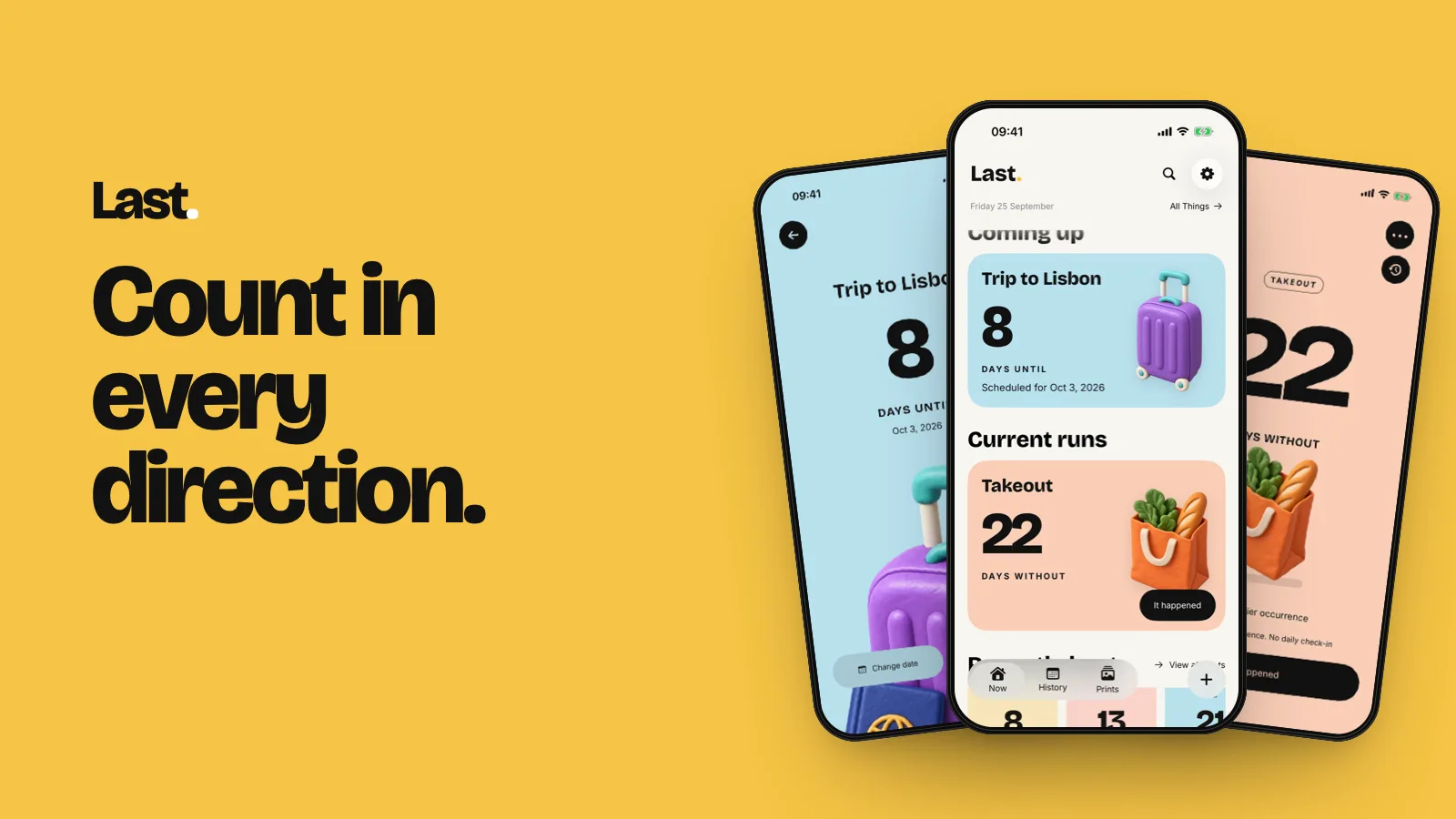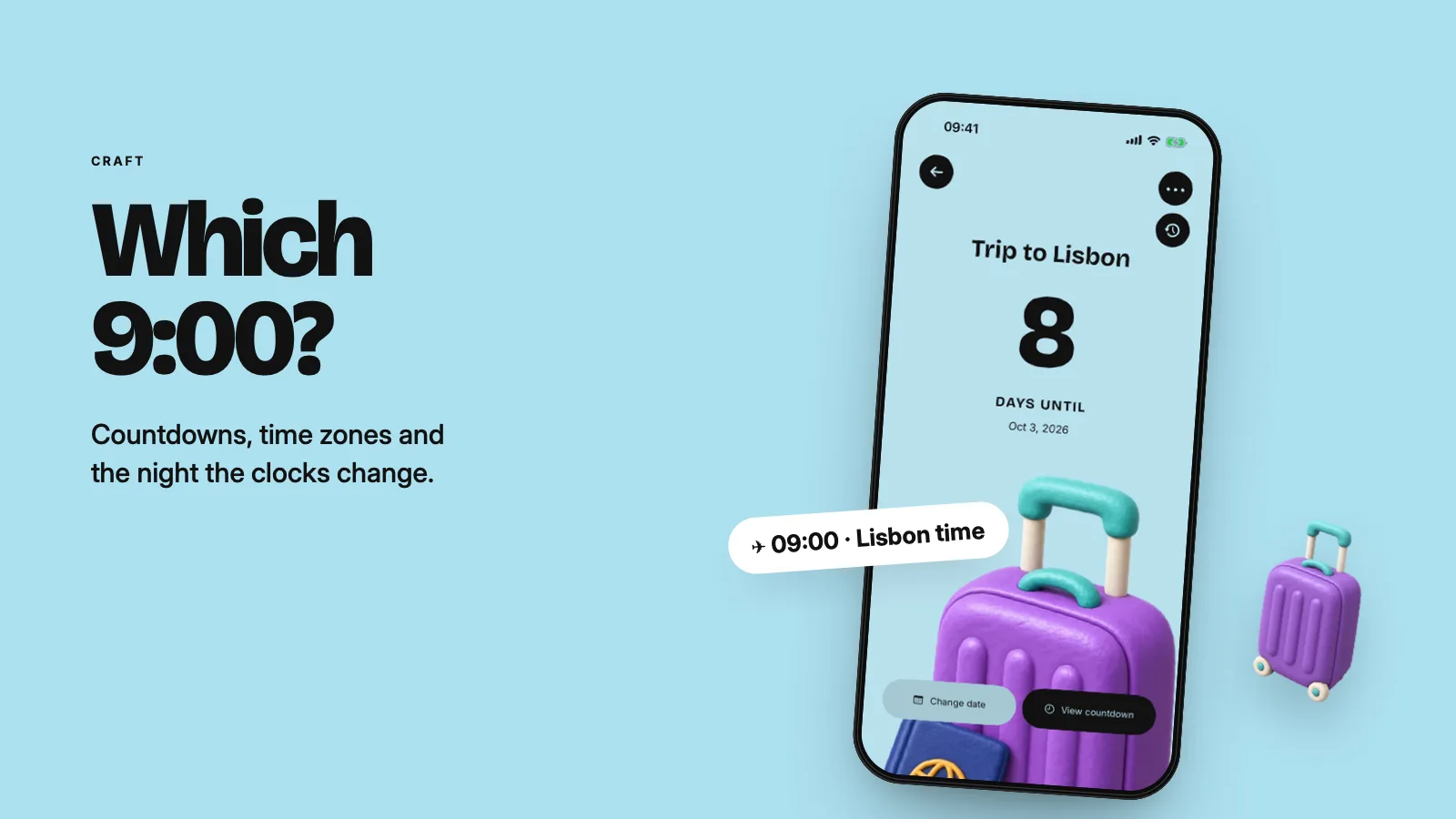
Every time you reset a counter in Last., the app makes a poster. Here's how that poster gets made, and why it will look exactly the same in four years.
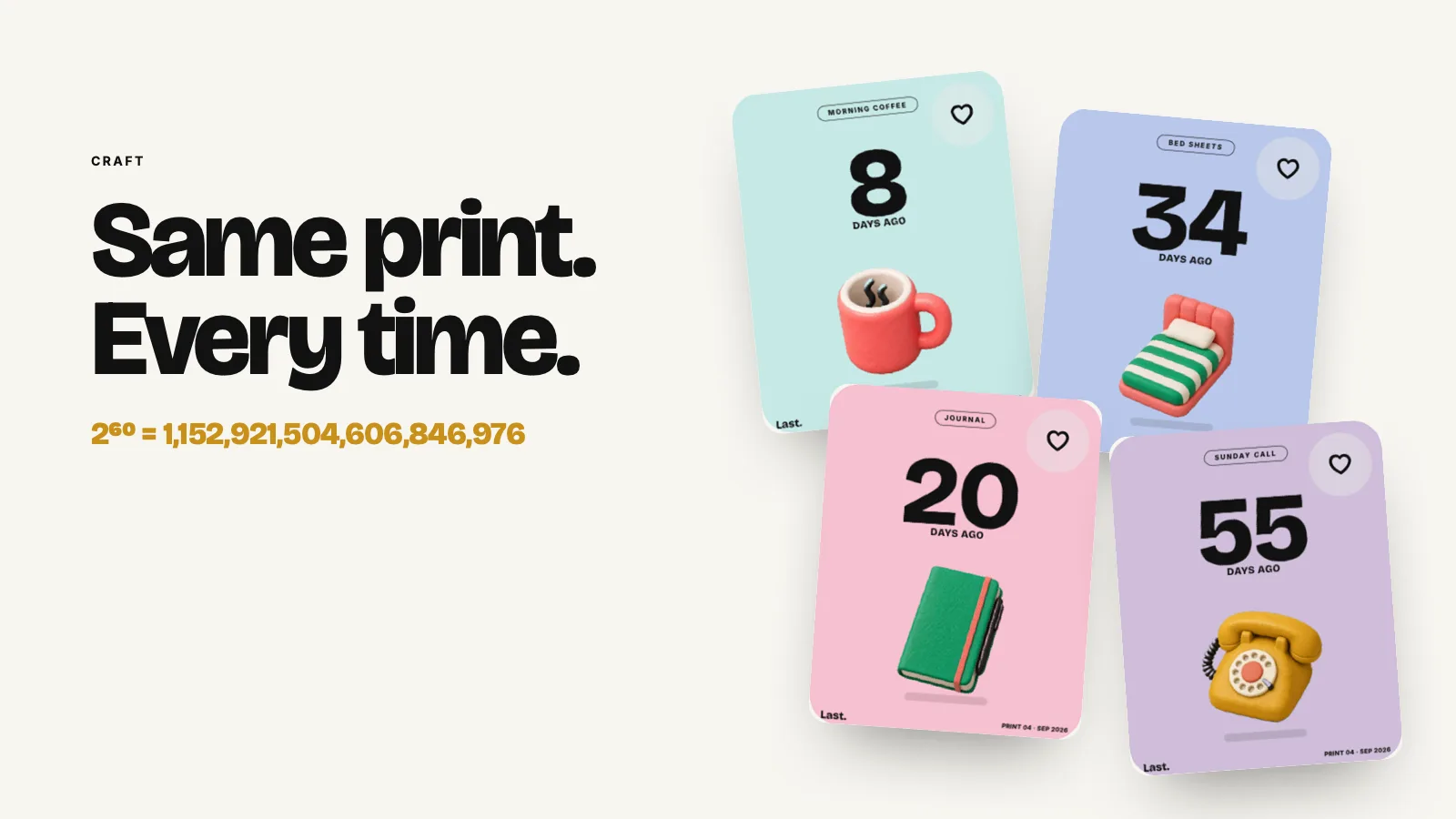
A print is the old number, a clay object, a colour and a date, laid out as a small poster. In the Editorial style it also gets a generated pattern: arcs, dots, waves, stripes, rings and so on. Nine families in all.
It would have been easy to make these with a random number generator and call it a day. But random means unrepeatable. Change phones, restore from a backup, or open the app after an update, and your favourite print might quietly become a different one. For something meant to be a keepsake, that's unacceptable.
A print is a pure function
So every print in Last. is deterministic. It's built from three things: the thing's identity, a seed, and the version of the generator. Same inputs, same poster, byte for byte. There's no clock involved and no randomness at render time. A print you make in 2026 will render identically in 2030.
Inside the seed there are separate streams for each layer, such as composition, palette, texture and motion, so changing one never shuffles another.
Your names never touch the art
One rule I'm particularly fond of: the seed never comes from the thing's name. It uses stable internal identifiers only. Whatever you call your counters, whether "Sheets" or something far more personal, the name never shapes the artwork, and it can't leak into it either.
Quality without curation
Generative art has a well-known problem: sometimes it's ugly. A number lands on top of the clay object, or two colours fight. I didn't want to hand-pick thousands of good layouts, so Last. checks each candidate against a set of rules (legibility, overlap, contrast). If one fails, it re-rolls deterministically, up to eight times. If all eight fail, it falls back to a hand-designed layout that always passes. The result is a quality floor with zero manual curation, and still no randomness.
How many prints are possible?
A lot. Take just one of the nine pattern families: the dots pattern keeps or drops each of its 60 dots independently. That's 260 possible layouts:
1,152,921,504,606,846,976
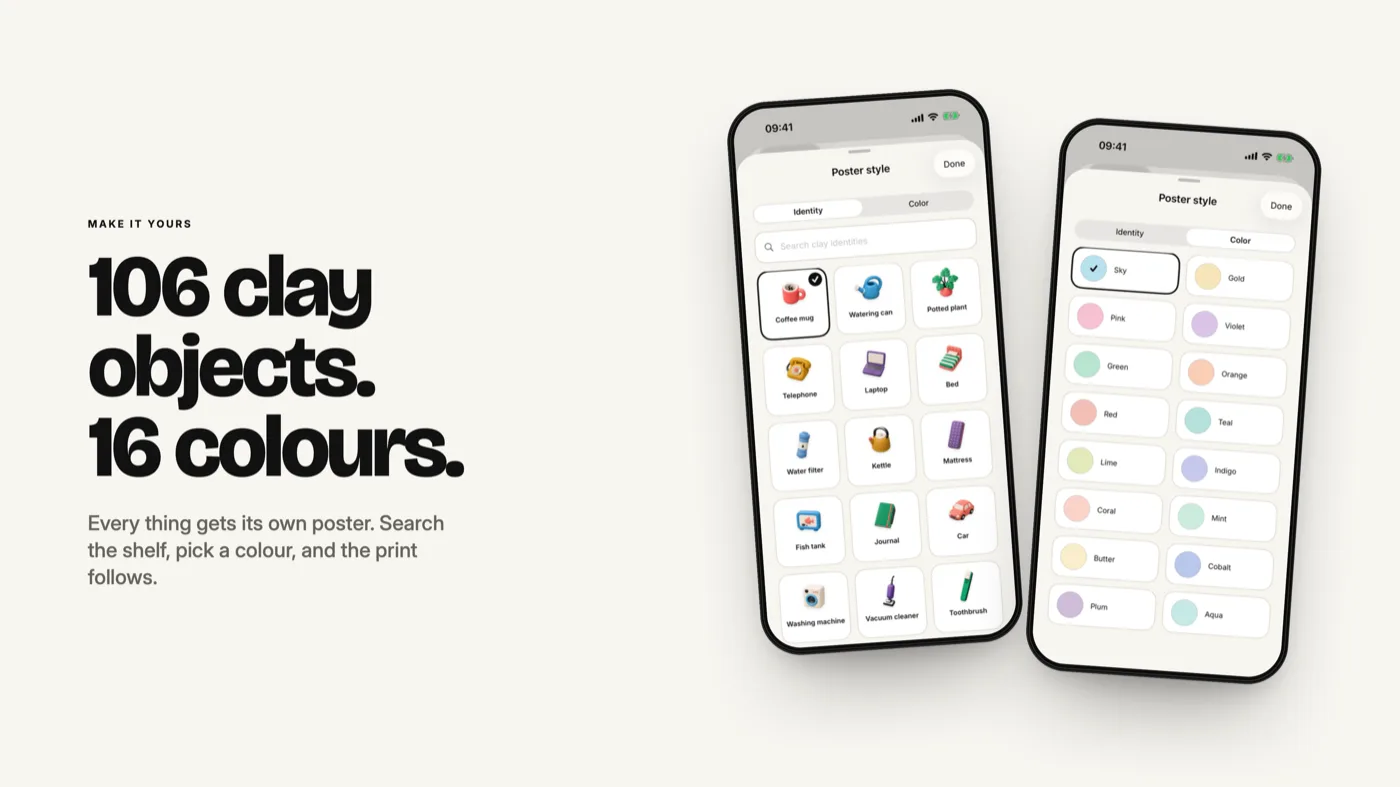
That's for one family, before counting the 106 clay objects, their three sculpts, 16 colours and every possible number. You're not going to see the same print twice.
Saved prints never change
Finally: once a print is saved, it's frozen. If you later switch styles or colours, your past prints stay exactly as they were. Your history shouldn't repaint itself.
Editorial prints come with Last Plus or Last Lifetime. Spotlight prints, clay objects and colours are free.